MARKET SHIFT / 02 OF 08
The evolution of the vehicle
A sequence of machines becomes a sequence of operating decisions.
01 / THE TRANSITION
Read the timeline as adaptation
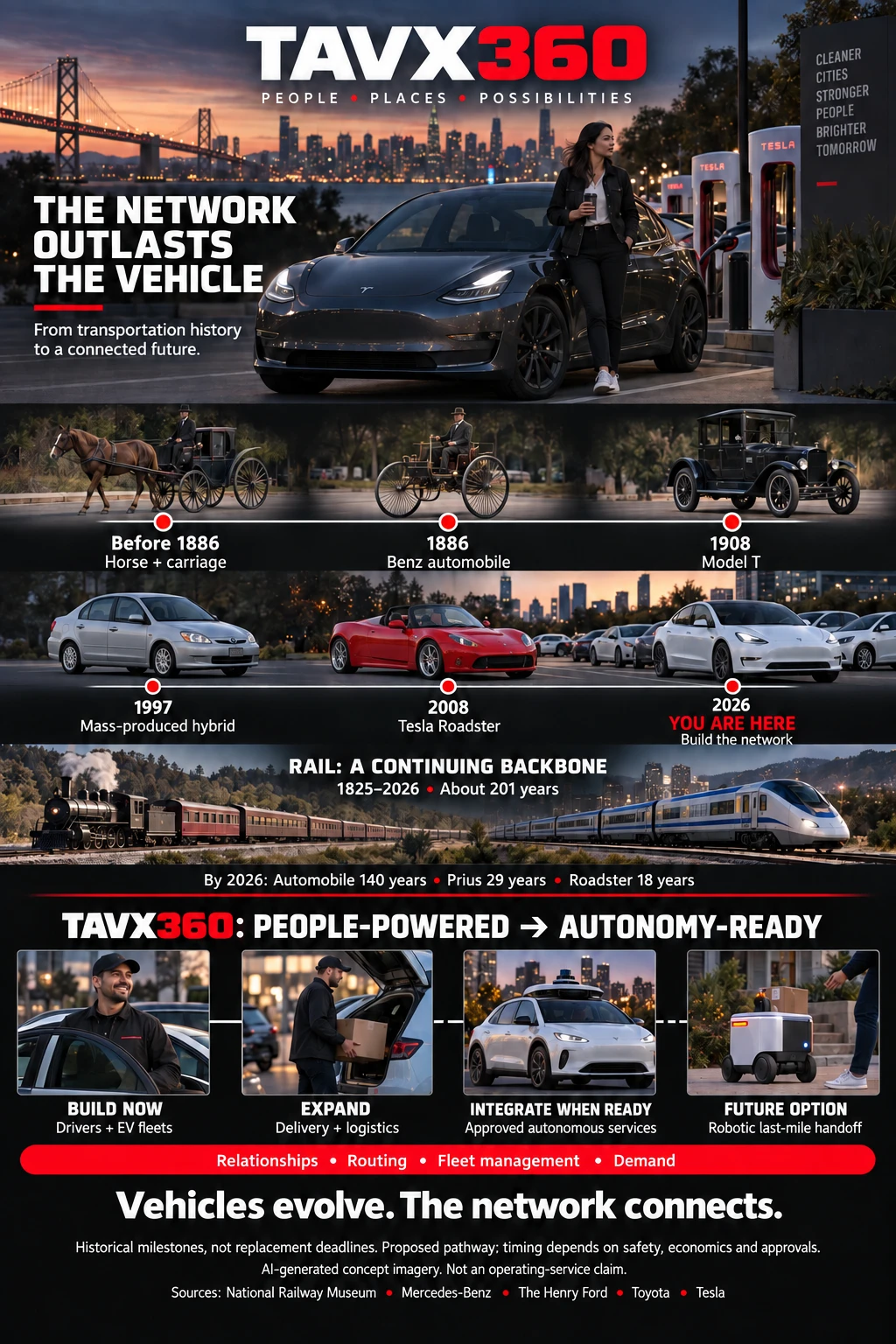
The infographic moves from horse-drawn transport through early automobiles, mass-market vehicles, hybrids, and modern EVs. These are selected milestones rather than an exhaustive history. Old and new systems overlap; a new technology does not instantly remove the installed base.
Each stage changes the operating question. Range, refueling, repair, purchase price, passenger needs, and local infrastructure all affect whether a vehicle is useful in a particular service. The newest vehicle is not automatically the most profitable one.
02 / THE TRANSITION
What an EV changes for an operator
A battery-electric fleet changes energy procurement, charging schedules, technician requirements, and downtime planning. Tires, brakes, suspension, cleaning, insurance, and accident repair still matter. Less routine engine maintenance does not mean zero maintenance.
The fleet should be selected around trips. Short repeat circuits, longer rentals, and premium experiences have different requirements. Passenger capacity is not the same as paid occupancy, and rated seating does not establish that every seat can be sold on every trip.
03 / THE TRANSITION
The hidden transition behind the timeline
The bodywork is the visible part. Beneath it, propulsion, electronics, diagnostics, and manufacturing processes change. Around it, the operator must adapt procurement, charging, training, and service arrangements. This is why the powertrain briefing belongs alongside the history.
Retooling creates work, but much of that work belongs to manufacturers and specialist suppliers. TAVX360’s accessible opportunities are closer to the customer: fleet deployment, site preparation, charging coordination, and reliable service.
04 / THE TRANSITION
How TAVX360 should choose
Build a vehicle-level operating record with acquisition terms, mileage, service availability, energy consumption, insurance quote, financing, and realistic resale assumptions. Compare vehicles for the same duty cycle instead of comparing a low purchase price with a different service.
A premium vehicle should earn its extra cost through demonstrated premium demand. Start with a fleet matched to your resources and market, keep a service reserve, and review actual revenue per available vehicle day. Plan expansion around customer commitments and available resources.
05 / THE TRANSITION
A two-to-four-year operating plan
The time and capital required to retool manufacturing creates the opening behind our strategy. As manufacturers establish new production capability, we expect competition for customers, locations, and partners to intensify. Secure your position while that transition is underway.
Move now by selecting your role, developing your fleet plan, and beginning the agreements that connect your business to the network. TAVX360 provides customized strategy and white-glove coordination through the process. Our thesis is that an early position committed to someone else may never become available to us again.
Primary sources
Sources support the factual context; TAVX360’s commercial interpretation is explained separately above.