MARKET SHIFT / 08 OF 08
Mobility and venue commerce
Trips and destinations can reinforce each other when the economics remain visible.
01 / THE TRANSITION
What the model proposes
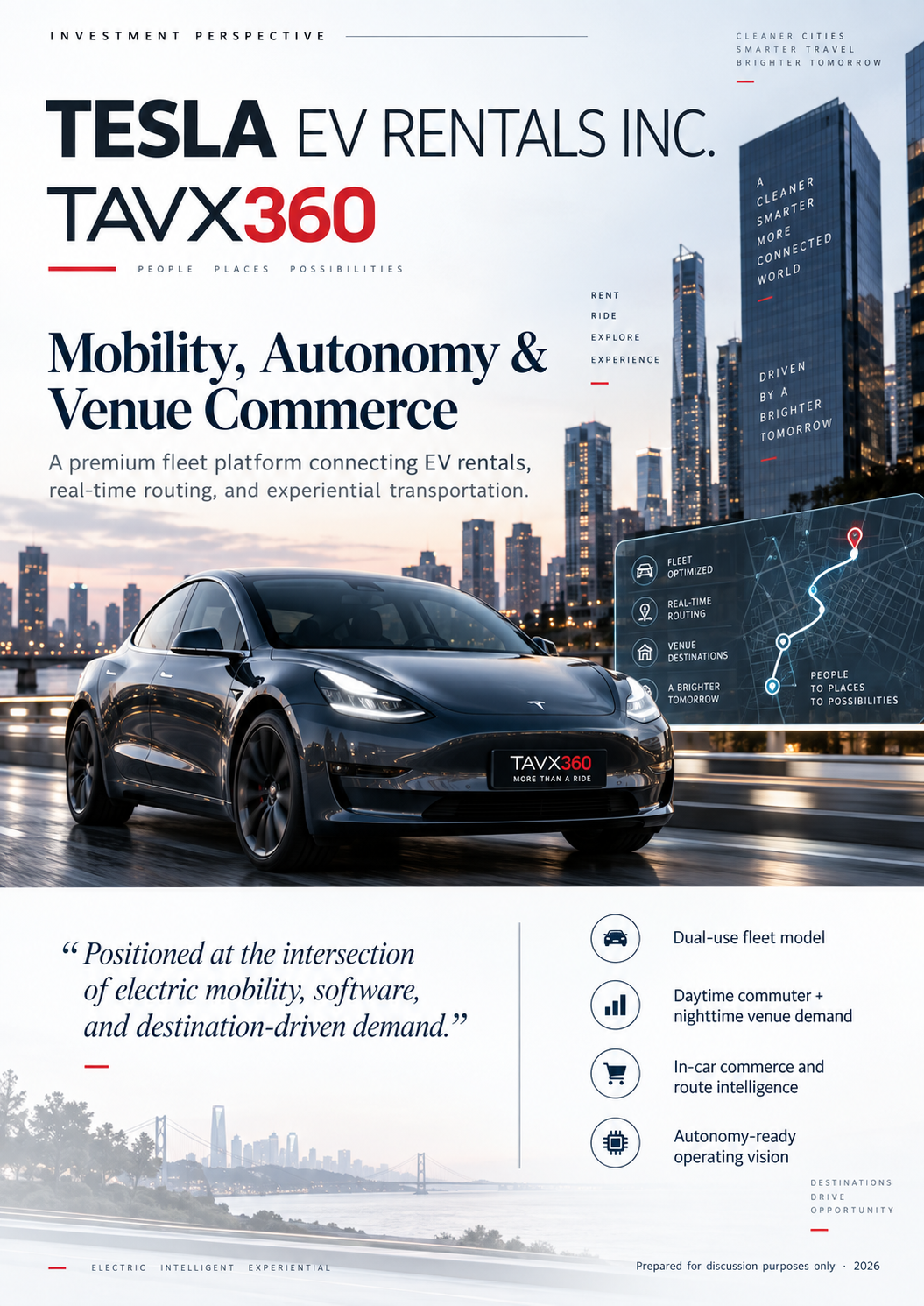
A member may use transportation to reach a venue, attend an event, take a trip, or access another club benefit. A venue may value predictable arrivals and customer access. The infographic connects these uses to a shared coordination platform.
The transition is from selling only access to a vehicle toward organizing a broader customer experience. That can create more reasons to use the service, but each benefit still has a delivery cost and a customer expectation.
02 / THE TRANSITION
Where the plates meet
Vehicle availability intersects with event schedules. Parking access intersects with the venue’s operating hours. Charging intersects with the next departure. Membership benefits intersect with merchant agreements. These are practical coordination points rather than automatic synergies.
The smallest opportunity may be a scheduled event pickup, a member discount agreement, a managed reservation service, or a specific charging location. Test those arrangements individually before combining them into a broad package.
03 / THE TRANSITION
Make the commercial agreement explicit
A venue arrangement should state the service, customer entitlement, fee or revenue share, reporting method, settlement schedule, and responsibility for refunds. A discount offered by a partner is not TAVX360 revenue unless the contract creates a payment.
A transport booking should identify its price and what is included. If charging or other costs are passed through, communicate the charge clearly before purchase. The customer experience should be simple even when the internal accounting has several components.
04 / THE TRANSITION
Use the day carefully
Commute hours, errands, rentals, and evening events can occupy different time windows. This creates a scheduling hypothesis worth testing. It does not establish that the same vehicle will earn across every window without repositioning, cleaning, charging, or service time.
Use a vehicle calendar and record contribution for each activity. Include the time between bookings. A lucrative event trip can still reduce total daily earnings if it prevents a longer rental or creates an expensive empty return.
05 / THE TRANSITION
Why the opportunity can persist
Useful destinations and recurring relationships can create repeat demand. The thesis holds when the experience saves the customer time or provides a benefit they value enough to pay for. It weakens when discounts are attractive but transport remains unreliable or uneconomic.
The model should earn its breadth. Add a partner service when it improves retention or contribution, not merely because it makes the membership list longer. A focused, dependable offer is a better foundation for expansion.
06 / THE TRANSITION
A practical 2026–2030 path
The time and capital required to retool manufacturing creates the opening behind our strategy. As manufacturers establish new production capability, we expect competition for customers, locations, and partners to intensify. Secure your position while that transition is underway.
Move now by selecting your role, developing your fleet plan, and beginning the agreements that connect your business to the network. TAVX360 provides customized strategy and white-glove coordination through the process. Our thesis is that an early position committed to someone else may never become available to us again.