TAVX360 FIELD GUIDE · MOBILITY SYSTEMS
Vehicles change.
Networks adapt.
Follow the shift from new machines to new ways of moving people and goods. The lesson for fleet partners: research demand, build useful operations, and grow when the evidence supports it.
Read the sequence, not a promised timeline. Historical milestones are selected examples. TAVX360’s operating pathway is a strategy thesis; future services depend on technology, safety, market economics, insurance and regulatory approval.
Sources and image notes ↓01 / CHANGE TAKES TIME
A new vehicle does not replace a system overnight.
The Benz patent milestone came in 1886. It marks an important point in automobile history, not the end of horse-powered transport. Horse-drawn vehicles remained in use into the first decades of the twentieth century, while cities, roads, businesses and customer habits adjusted at different speeds.
That history is a useful planning lens: a new vehicle matters, but so do the services and infrastructure that make it practical.
The Henry Ford: Carriage Era ↗ Mercedes-Benz: 1885–1886 milestone ↗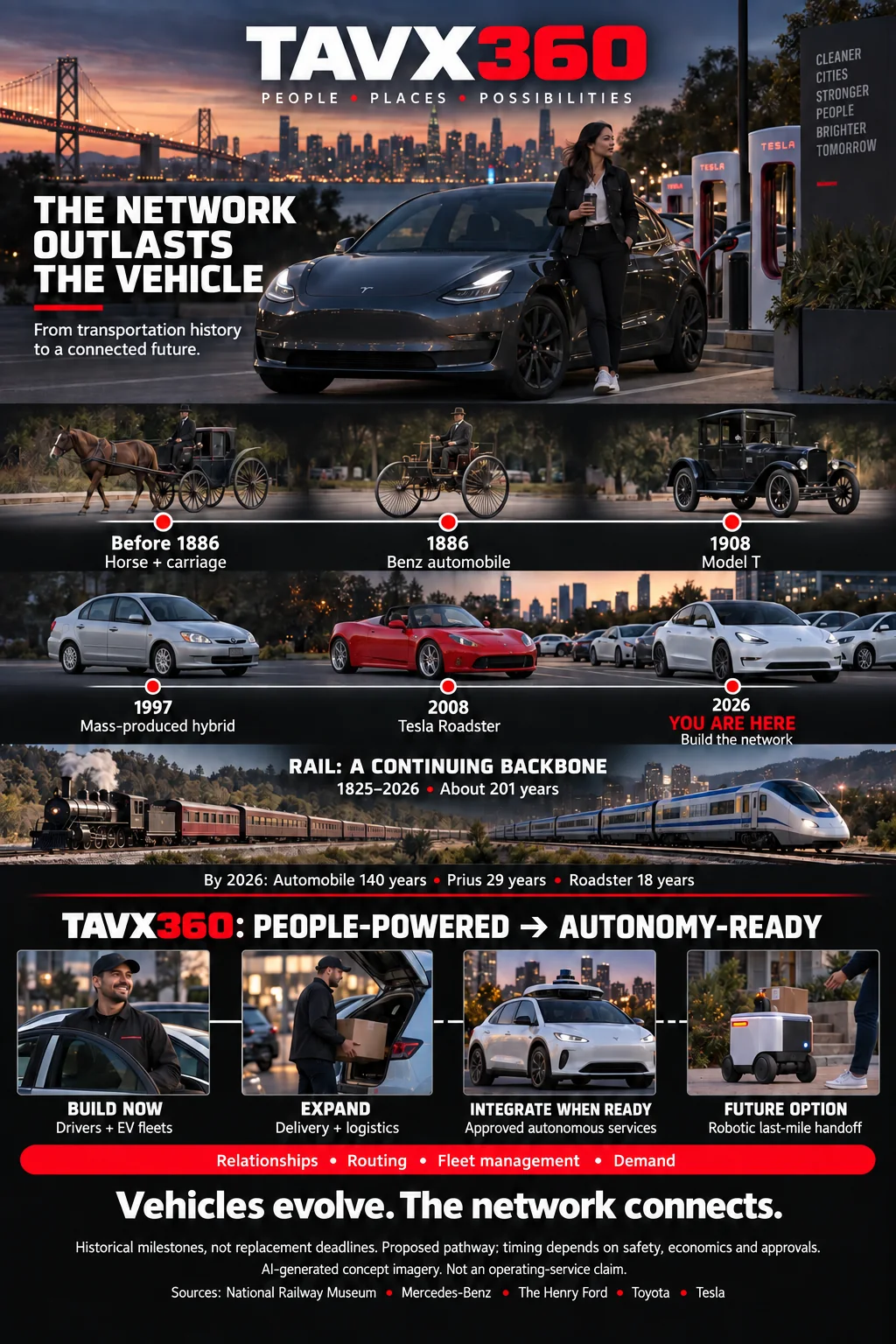
02 / NETWORKS ENDURE
Industries adapt in layers.
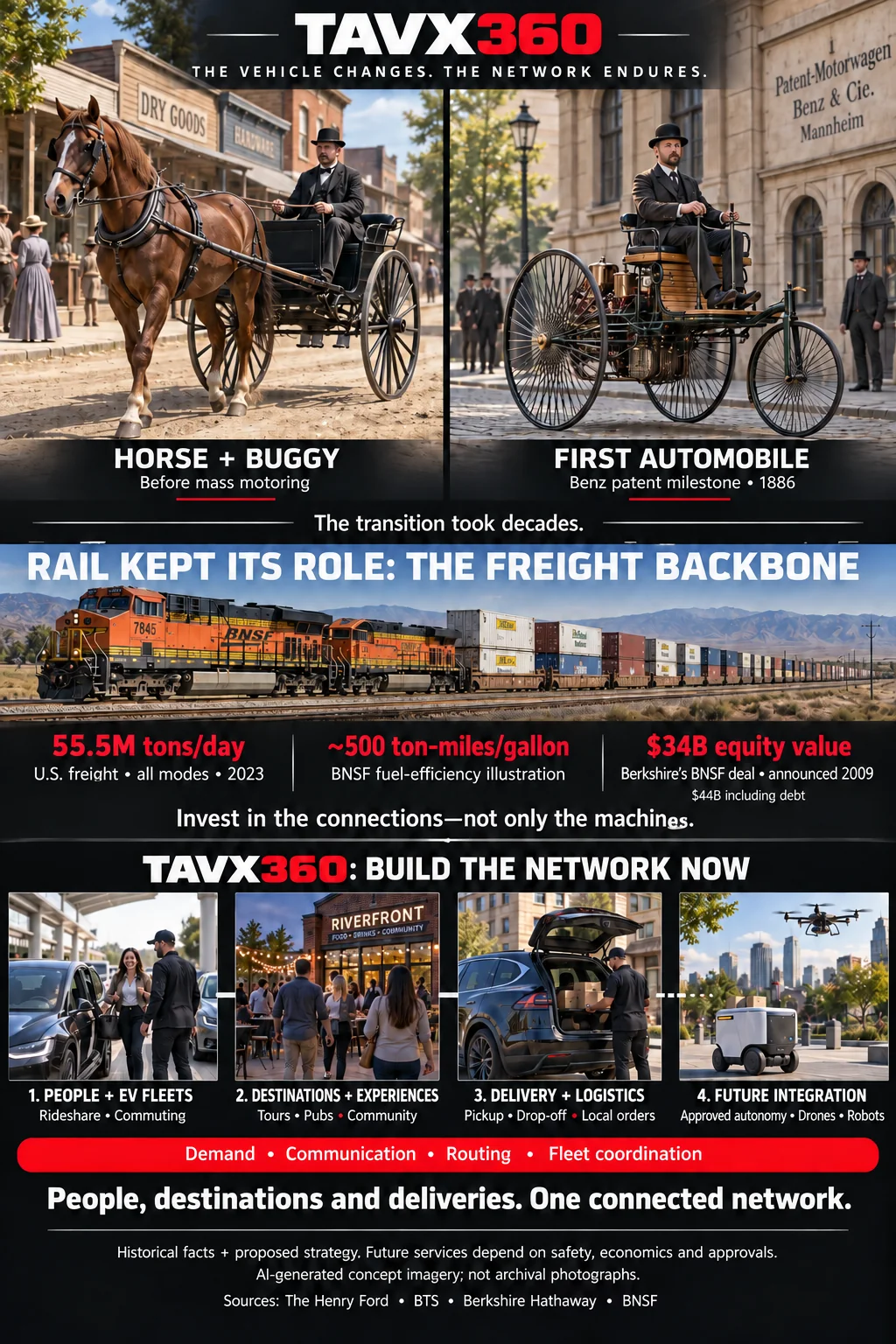
Transportation has repeatedly combined new vehicles with older infrastructure, specialized businesses and new services. Rail remains one part of a larger freight system; roads, ports, rail terminals and local delivery connect different legs of a shipment.
The U.S. Bureau of Transportation Statistics reports a 2023 daily average of about 55.5 million tons of freight across all transportation modes. That figure describes the whole system, not rail alone.
Context for the figures printed in this concept poster
- 55.5M tons/day: U.S. freight across all modes in 2023, per BTS.
- About 500 miles per gallon per ton: a BNSF-reported fuel-efficiency illustration; actual results vary by operating conditions.
- BNSF transaction: Berkshire’s 2009 announcement described an approximately $44B transaction value including $10B of BNSF debt. The release described Berkshire’s investment as about $34B.
03 / BUILD USEFUL SERVICE
Start with customers and accountable operations.
TAVX360’s proposed approach starts with services that can be evaluated today: rentals, business accounts, approved rideshare, delivery and experiences operated by qualified partners. Training and market research help partners assess local demand, plan a service mix and identify operating requirements.
Track vehicle-level bookings, utilization, costs, downtime and service quality. Expand after the records support it. A route image is a concept, not a live map or evidence of fleet coverage.
Explore the partner network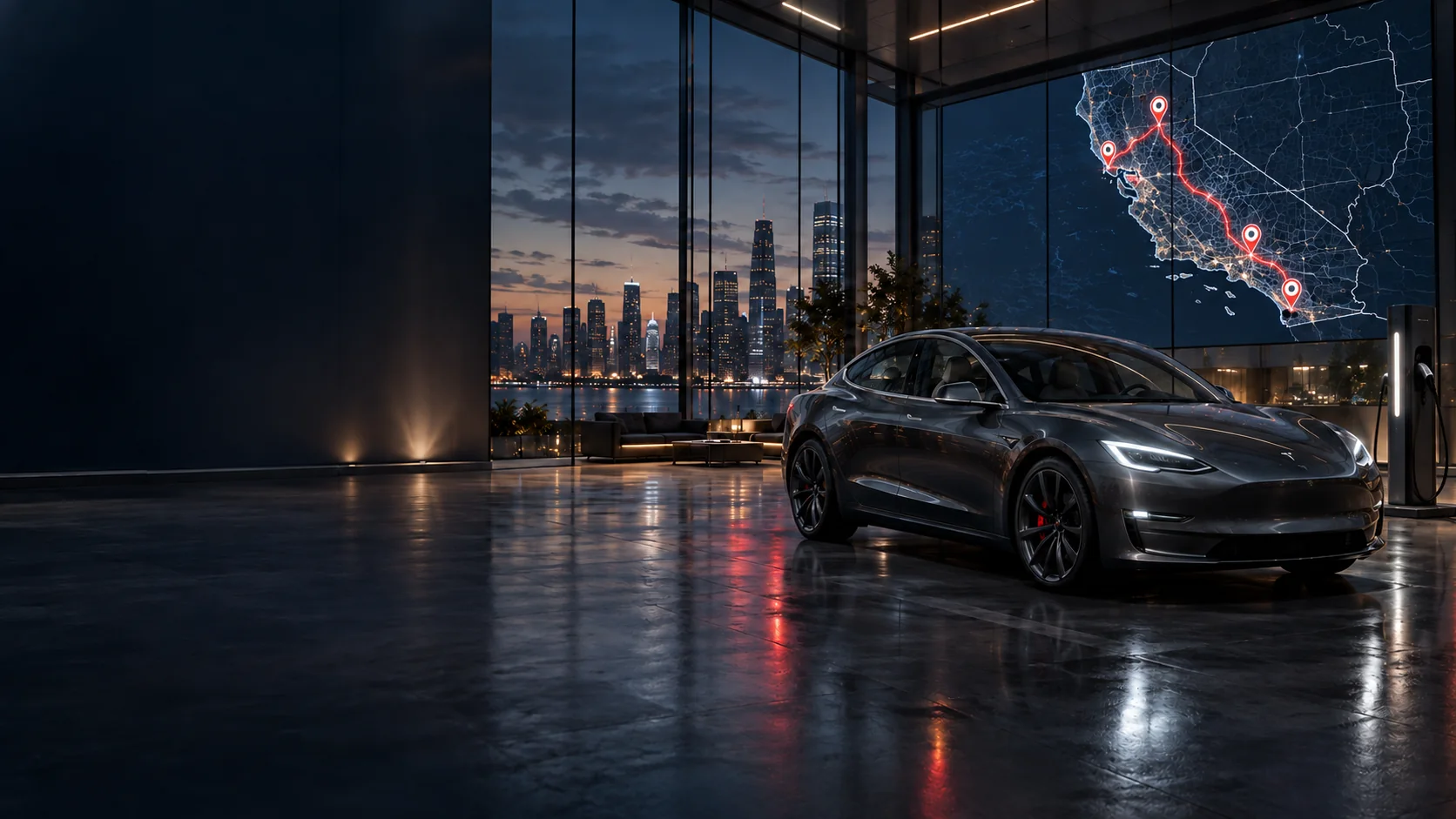
04 / MEASURE AND IMPROVE
A repeatable learning loop makes growth reviewable.
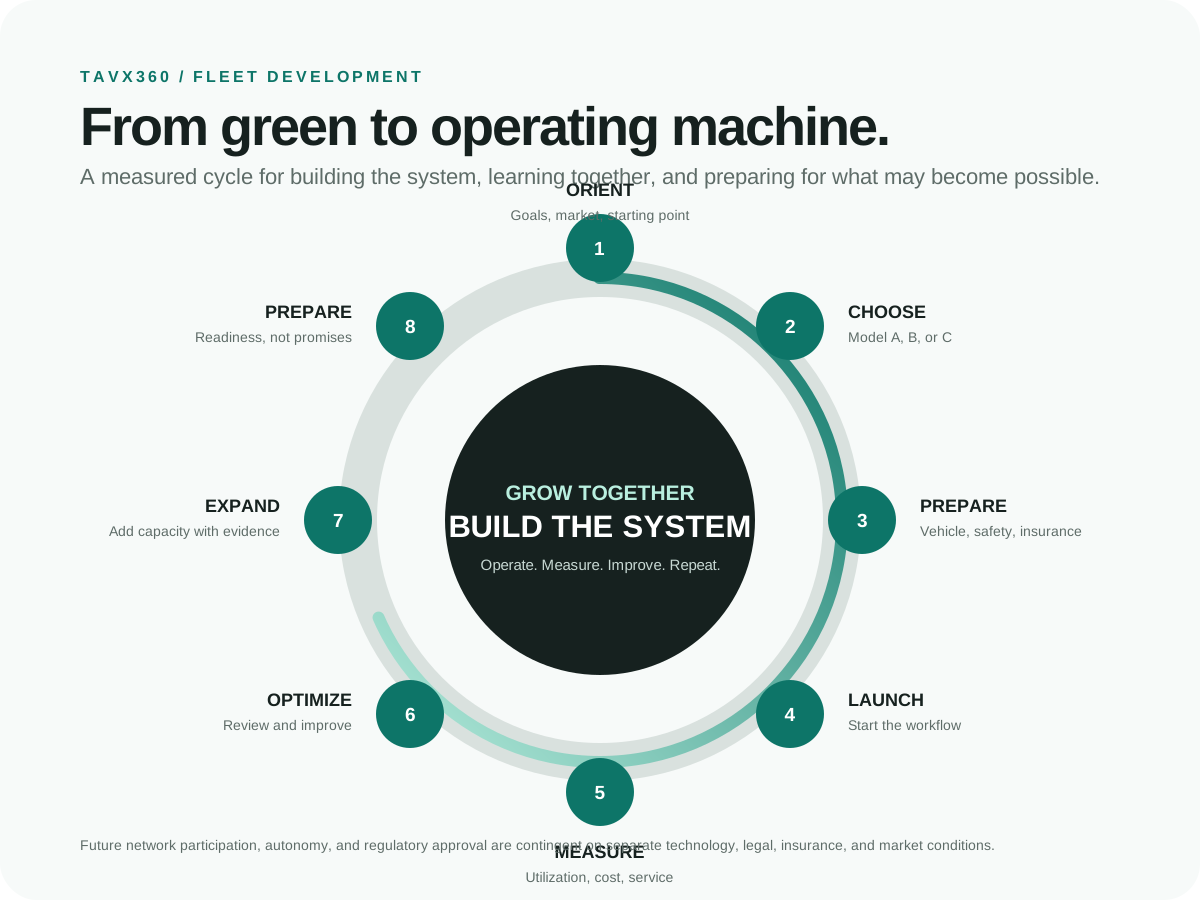
The eight-step journey turns broad ambition into a sequence partners can discuss and measure. The first steps define the market and prepare the vehicle; later steps review utilization and costs before adding capacity.
“Prepare” means readiness work. It does not mean that autonomous service is approved, available or scheduled.
- 01OrientGoals, market and starting point
- 02ChooseSelect an operating model
- 03PrepareVehicle, safety and insurance
- 04LaunchBegin the verified workflow
- 05MeasureUtilization, cost and service
- 06OptimizeReview and improve
- 07ExpandAdd capacity with evidence
- 08PrepareMonitor future readiness gates
05 / PLAN BEHIND GATES
Autonomy is a future scenario with separate gates.
California’s DMV separates autonomous-vehicle permits into testing with a safety driver, driverless testing and deployment. Each category has its own approved locations and operating conditions.
TAVX360 can research possible future roles for a mobility network, but these reference vehicles are not TAVX fleet vehicles and do not establish a local service, permit or launch date.
California DMV: Autonomous Vehicles ↗ Explore partner training


READ FURTHER
Sources, image notes and next steps.
The history here is a learning frame for discussion. It is not a forecast, investment recommendation or claim that TAVX360 operates every service shown.
TAVX360 timeline posters and coordination image are AI-generated illustrations. They are not archival photographs, live route data or proof of operating services. Robotaxi photographs are reference material. TAVX360 and Tesla EV Rentals Inc. are independent of Tesla, Inc.